Scales Reference Table
| Type | Scale Formula | Example in C | Common Chords | Mood / Usage | Actions |
|---|---|---|---|---|---|
| Major Scale (Ionian) | W-W-H-W-W-W-H | C-D-E-F-G-A-B | C, Dm, Em, F, G, Am, Bdim | Happy, bright, versatile | |
| Natural Minor (Aeolian) | W-H-W-W-H-W-W | C-D-E♭-F-G-A♭-B♭ | Cm, Ddim, E♭, Fm, Gm, A♭, B♭ | Sad, melancholic, emotional | |
| Harmonic Minor | W-H-W-W-H-W+H-H | C-D-E♭-F-G-A♭-B | Cm, Ddim, E♭+, Fm, G, A♭, Bdim | Dramatic, Middle Eastern | |
| Melodic Minor | W-H-W-W-W-W-H | C-D-E♭-F-G-A-B | Cm, Dm, E♭+, F, G, Adim, Bdim | Jazzy, sophisticated | |
| Pentatonic Major | 1-2-3-5-6 | C-D-E-G-A | C, Dm, Em, F, G, Am | Bright, folk, rock | |
| Pentatonic Minor | 1-♭3-4-5-♭7 | C-E♭-F-G-B♭ | Cm, E♭, Fm, Gm, B♭ | Blues, rock, soul | |
| Blues Scale | 1-♭3-4-♭5-5-♭7 | C-E♭-F-G♭-G-B♭ | C7, F7, G7 | Blues, rock, jazz | |
| Dorian Mode | W-H-W-W-W-H-W | C-D-E♭-F-G-A-B♭ | Cm, Dm, E♭, F, G, Am, B♭dim | Jazzy, minor with raised 6th | |
| Phrygian Mode | H-W-W-W-H-W-W | C-D♭-E♭-F-G-A♭-B♭ | Cm, D♭, E♭, Fm, Gdim, A♭, B♭m | Spanish, flamenco, metal | |
| Lydian Mode | W-W-W-H-W-W-H | C-D-E-F♯-G-A-B | C, D, Em, F♯dim, G, Am, Bm | Dreamy, mystical, film scores | |
| Mixolydian Mode | W-W-H-W-W-H-W | C-D-E-F-G-A-B♭ | C, Dm, Edim, F, Gm, Am, B♭ | Rock, blues, dominant feel | |
| Whole-Tone Scale | W-W-W-W-W-W | C-D-E-F♯-G♯-A♯ | Caug, Daug, Eaug, F♯aug, G♯aug, A♯aug | Dreamy, ambiguous, jazz | |
| Diminished Scale | H-W-H-W-H-W-H-W | C-D♭-E♭-E-F♯-G-A-B♭ | Cdim, D♭dim, E♭dim, Edim | Jazz, tension, film scores | |
| Hungarian Minor | W-H-W+H-H-W-H-W | C-D-E♭-F♯-G-A♭-B | Cm, Ddim, E♭+, F♯, G, A♭, Bdim | Eastern European, gypsy |
Detailed Scale Information
Chords Reference
| Chord Type | Formula | Example in C | Notation | Sound Character |
|---|---|---|---|---|
| Major | 1-3-5 | C-E-G | C | Happy, stable |
| Minor | 1-♭3-5 | C-E♭-G | Cm | Sad, melancholic |
| Augmented | 1-3-♯5 | C-E-G♯ | Caug or C+ | Tense, mysterious |
| Diminished | 1-♭3-♭5 | C-E♭-G♭ | Cdim | Dissonant, tense |
| Suspended 2nd | 1-2-5 | C-D-G | Csus2 | Open, ambiguous |
| Suspended 4th | 1-4-5 | C-F-G | Csus4 | Open, resolving |
| Major 7th | 1-3-5-7 | C-E-G-B | Cmaj7 | Jazzy, sophisticated |
| Dominant 7th | 1-3-5-♭7 | C-E-G-B♭ | C7 | Bluesy, wants to resolve |
| Minor 7th | 1-♭3-5-♭7 | C-E♭-G-B♭ | Cm7 | Jazzy, melancholic |
| Half-Diminished 7th | 1-♭3-♭5-♭7 | C-E♭-G♭-B♭ | Cm7♭5 | Jazzy, tense |
| Diminished 7th | 1-♭3-♭5-♭♭7 | C-E♭-G♭-B♭♭ | Cdim7 | Very tense, symmetric |
| Major 9th | 1-3-5-7-9 | C-E-G-B-D | Cmaj9 | Very rich, jazzy |
| Dominant 9th | 1-3-5-♭7-9 | C-E-G-B♭-D | C9 | Bluesy, rich |
| Minor 9th | 1-♭3-5-♭7-9 | C-E♭-G-B♭-D | Cm9 | Jazzy, melancholic |
| Add9 | 1-3-5-9 | C-E-G-D | Cadd9 | Pretty, contemporary |
| Power Chord | 1-5 | C-G | C5 | Strong, rock |
| Italian Augmented 6th | ♭6-1-♯4 | A♭-C-F♯ | It+6 | Classical, resolving |
Common Chord Progressions
I-IV-V (12-Bar Blues)
C - F - G
I-V-vi-IV (Pop Progression)
C - G - Am - F
ii-V-I (Jazz Progression)
Dm - G - C
vi-IV-I-V (50s Progression)
Am - F - C - G
I-vi-ii-V (Rhythm Changes)
C - Am - Dm - G
Circle of Fifths
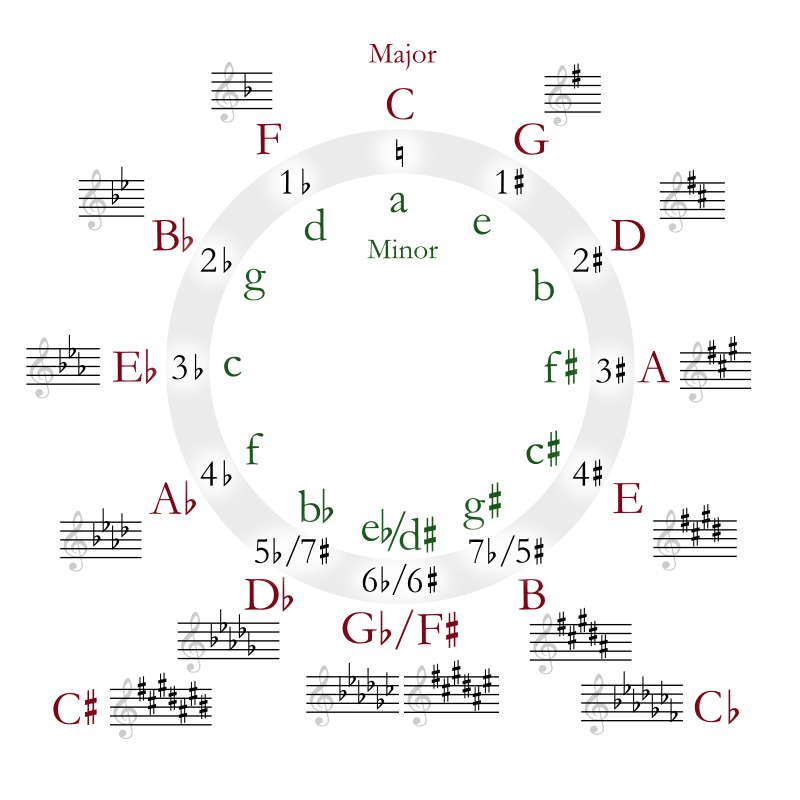
The circle of fifths shows the relationship between the 12 tones of the chromatic scale, their corresponding key signatures, and the associated major and minor keys.